



Last Updated on October 28, 2025 by IDS Team
Podcasting is more popular than ever, so any content creator needs great podcasting equipment to get started. However, how to choose and what might you need? With a wealth of information at idesignsound, we know that good podcasts don’t just rely on a decent home studio setup. They can also benefit from a variety of other features, such as de-essers, noise reduction, and a great pair of headphones. We have other directories on similar topics such as hardware and in ear studio monitors, however, this one is specific to looking at podcasts as a whole.
Take a look at the directory below to find the possibilities in all categories, ranging from microphones for all budgets to plugins that will help perfect your sound. We’ve scoured the internet for a look at what’s available, and although there are always new versions of products or gear from indie designers being released, these are some of the most prominent across the board that every podcaster should be aware of. Read on for the whole range of choices…
Absolutely Essential Podcasting Equipment: Microphones
No podcasting equipment set would be complete without a good mic. We’ve chosen to group mics and relevant accessories together, so some of the options here come with pop filters and some don’t.
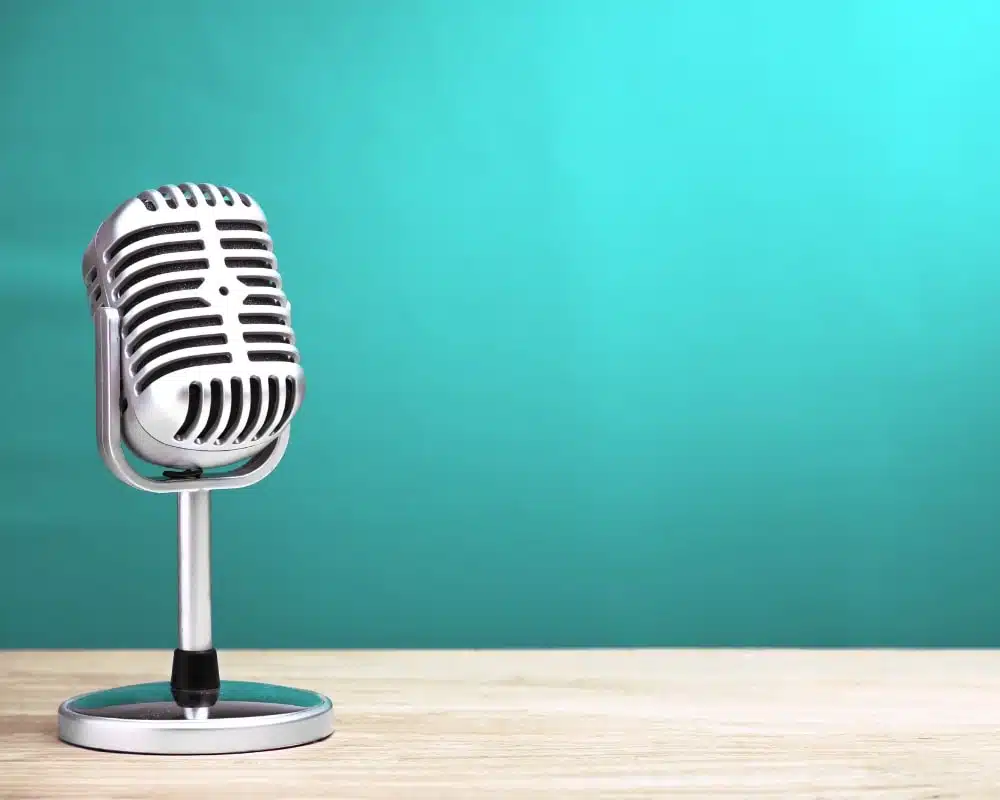
Either way, choosing the right mic can make or break your podcast in terms of clarity, atmosphere, and how much post-podcasting cleanup you have to do. Read on for the mics you should know which give a pretty comprehensive choice for all levels, themes, and abilities.
Pre Sonus PD70
This is an XLR mic that is nevertheless ideal for podcasting. It is a mid-range mic with a metal body and some interesting features, including podcast optimized tuning cardioid pattern. This is great at eliminating unwanted sound off axis, and focuses entirely on your sound source. It’s also perfect for both clear vocals in quiet environments as well as picking up instruments; it works easily as part of a versatile at home setup. It is a relatively cheap microphone, averaging around 120 USD depending on your retailer.
Razer Seiren Elite
This is a mic with a high number of built-in features, including a limiter with both digital and analog capacity, a high pass filter, and a plug and play feature. It has strong off-axis rejection with a cardioid polar pattern, although it is not as sensitive as some other mics on the market. This is an ideal mic if you want a higher level of control over your sound for example, if you are going to be podcasting in a large number of different environments. This is also a reasonably cheap mic at around 120 USD from Amazon.
Razer Seiren Mini
This is the small version of the Razor Seiren Elite, and one of the main differences is that it has a supercardioid polar pattern, meaning it has a very intense off-axis rejection, and it is incredibly focused on the sound source. This makes it an ideal mic for very quiet places and will allow you to pick up soft vocals, gain ultimate clarity, and even record quiet instruments or sounds, This mic is perfect if you are recording in still environments, and is both budget-friendly and has a plug-and-play feature. It is also extremely cheap, at between 40 and 50 USD depending on retailer.
Rode NT1 5th Gen
This is a cardioid condenser microphone with an aluminium body and nickel plating. It is one of the most sensitive and nuanced USB microphones, and also comes with XLR capabilities, making it a dual connectivity microphone. It has extremely loud noise levels and is brilliant at cutting off-axis sound, whilst still being very portable. The combination of feature-denseness with quality means this mic packs a punch. The NT1 5th Gen is available for 236 USD.
Rode NT1 USB Mini: TOP CHOICE Best SMALL Podcasting Equipment Category
The NT USB is a zero-latency podcasting mic, meaning it is ideal for live broadcast, gaming or podcasting situations. It allows your vocals to get through as clearly and efficiently as possible while still being relatively accessible and affordable to the average beginner. Furthermore, this mic is a condenser microphone, meaning it has reasonable levels of sensitivity for focusing better on the sound source. Likewise, it also comes with an included desktop tripod and pop filter. As a result, you have everything you need to start podcasting from the comfort of your laptop.
Rode PodMic
The pod mic is similar to the NT USB, although it has more of a focus on large broadcast situations or professional broadcasting as opposed to live streaming, gaming, or podcasting from your desk. It has a cardioid polar pattern and allows you to achieve dynamic and clear sound quality for your voice. It is a dynamic microphone with a more rugged feel and is ideal for taking with you, as it is sturdy enough for different situations as well as sensitive enough to give you clear sound as well as effortlessly process sonic intensity and loud situations.
Rode Procaster
On this list, it differs from the other in that has a tighter sound due to its pickup pattern. Otherwise, it is a similarly rugged dynamic mic that is ideal for professional broadcast situations, amateurs who want high-quality sound, or if you are dealing with powerful noise or different sound sources. It has a cardioid polar pattern, so if you point it directly at the sound source as it rejects everything off-axis. And a big bonus in terms of travel and high-intensity situations – it is also robust enough that it can handle intense ups and downs. This is essentially the higher end offering from Rode, and it averages around 339 USD.
Samson Q2U
This is a dual-output mic with both USB and XLR compatibility. It’s a rugged dynamic microphone with a cardioid polar pattern, and is ideal the situations where you may be both podcasting as well as wanting real time sound, for example, if you are twitch streaming or gaming. It is a plug-and-play USB microphone with a metal body which is sensitive and good at focusing on the sound source while still being accessible as a first microphone. It also comes in a complete package with cables and other accessories, averaging at 120 USD on retailers like Amazon.
Best Podcasting Equipment For Levelling Up: Shure SM7B
The Shure SM7B is a perfect professional microphone due to its robustness, combined with relative sensitivity and features, although for a somewhat higher price. It has a wide frequency response and high gain, and does great at picking up a range of sounds. For tight recording an dultimate focus, comes in a cardioid polar pattern that allows it to reject noise off-axis and focus on the sound source. It is an XLR mic, although it’s still reasonably portable and convenient. This is a highly talked about microphone that is frequently recommended across a wide range of applications, although it’s less accessible for beginners at 550 USD.
AKG C214
This is a large diaphragm condenser microphone which has been designed as a less expensive alternative to the high-end c414 series from the same manufacturer. It has a cardioid polar pattern, and it has a rugged metal case that allows you to easily take it on the road in order to podcast wherever you like. Outside of this, it has a range of 20 to 20,000 hertz, and as a condenser mic is very sensitive to frequency nuances. The 20 decibel attenuator base cut feature allows you to record sounds up close, minimising imperfections. Overall, this is a very versatile mic that is ideal if you also think you will record other sources of sound. It’s on the pricer end, costing 460 dollars.
AKG Lyra
This is another mic from AKG Acoustics, and this time it’s designed specifically for podcasting with ultra HD sound. The website describes it as being applicable for YouTube gaming podcasting, and much more. It is not necessarily as high-quality a mic as some of the other offerings from the same company, but it is extremely value for money at only 99 US dollars. It contains options for using the front mic, front and back white stereo and more, with two simple buttons on the front that allow you to muffle the mic when needed. Due to the way it is designed specifically for podcasting and other similar audio endeavors, it has a removable desktop stand and a headphone jack, making it an extremely convenient option.
Aston Origin
The Origin is the first mic ever developed by Aston mics. It’s a cardioid condenser mic that is perfect for subtle, including singer-songwriters and spoken podcasts. With the built-in pop filter and director stand mounting meaning it is convenient and easy to use. This mic has a focussed, quiet, and intimate sound, and the design of the head is shock absorbent too. It costs about 275 USD depending on the retailer.
AT2040 Audio Technica
The AT 2040 is a hypercardioid podcasting mic which takes after traditional broadcasting mics. Of all of AudioTechnica options it is the one which is best for podcasting and recording on the go, due to its ability to isolate from the surrounding background noise. This ensures that even if you are somewhere really busy you get a crystal clear voiceover. Furthermore, it is rugged, meaning that it is possible to carry around and can still withstand some knocks and scrapes. It is slightly less expensive other Audio-Technica podcasting mics, sitting at 85 GBP.
AudioTechnica AT2020
The 2020 mic is to the 2040 except that it has a basic cardioid as opposed to hyper cardioid pattern. This means it focuses less on isolating sound, although it is still very good at doing this in comparison to other mics in general. Compared to the 2040, it makes a great on the road mic; this is a more versatile mic which is ideal for a home studio. As a dynamic mic, it is rugged and still able to isolate crystal clear speech from the surrounding noise. It is more expensive than the 2040 and costs 135 GBP, however small price differences occur depending on retailer. It is also available in USB format useful for digital content creators.
AudioTechnica AT2035
The 2035 is a versatile cardioid condenser microphone that is able to withstand differences in audio frequencies and decibel levels. It has a special button which allows you to capture loud voices or instruments making it ideal for spaces with difficult acoustics, it also contains built in features to improve the clarity of speech. It is more sensitive than a dynamic microphone, but is rugged enough to work in multiple environments and is ideal for both home use studio use or on the go. Like other Audio Technica podcasting mics, this one comes in a USB format as well. It costs approx 210 USD or 155 GBP depending on retailer.
AudioTechnica BP40: Our TOP Choice ‘Best Podcasting Equipment for a Professional Broadcast Sound’
This is a professional broadcast mic which is more expensive than other offerings from audio Technica. Nevertheless, the makers intend it specifically for broadcasting environments with lots of other technology. As a result it contains a humbucking coil system to reduce interference, as well as a broad mic shape which allows it to effectively pick up a whole range of sound. The hypercardioid dynamic microphone which combines ruggedness and versatility with the ability to effectively isolate sound. It costs just under 400 USD or just under 300 GBP depending on retailer.
Beyerdynamic M70 Pro X
The M70 ProX is another microphone design specifically for creators, this time optimized to give you a confident and assertive sound focusing on vocals as well as minimizing artefacts. This mic ontains a built-in pop filter and attenuation to control difficult plosives and sibilance while you are recording. It has a slim and streamlined design which makes it convenient to take with you. It is a wired microphone that fits most XLR cables, and it’s cardioid pattern is ideal at isolating sound in all sorts of environments. Prices vary considerably, and it is available from multiple retailers.
Blue Ember Microphone
The Ember Microphone from Blue Audio is a small and unobtrusive microphone designed for at-home songwriters and podcasters. It is a directional cardioid mic which rejects sound from the back making it great for isolating whatever you need to do, whether that is crystal clear vocals or the gentle strum of an acoustic guitar. It contains side address form factor, meaning it picks up sound from the side. This allows you to position it creatively and subtly in a variety of studio applications. This mic costs $99 and is part of a large range of microphones from Blue Audio, some of which start as cheaply as $50.
Blue Yeti Microphone
The Blue Yeti microphone costs $140, and it is an extremely value packed microphone. It is a popular choice amongst many streamers, podcasters, and content creators. This microphone has not just one but four polar patterns, including stereo, cardioid, bidirectional, and omnidirectional. It also comes with built-in software voice changing effects, giving you a whole new world once you have connected it to your laptop. As a USB microphone, it’s ideal for on the go content creation too.
E100 SX from CAD Audio: Our RUNNER UP ‘Best Podcasting Equipment for a Professional Broadcast Sound’
The E100 SX is part of a series from CAD audio. It’s a large diaphragm supercardioid condenser mic, with a focus on balancing the high and low frequencies. As a result it can nullify some of the common issues that come with intimate broadcast recordings such as hiss, and the sensitivity of these mics to bass. For example it has a high pass filter which enables crystal clarity. What sets it apart is the way that it maintains a vintage richness and warm tone due to the fact it takes after classic broadcast mics. This mic balances the organic sound of older models with the modern requirements of high definition, and comes at convenient price of 99 dollars.
Electro Voice RE20
The RE20 is a broadcasting specific mic – a cardioid microphone with absolutely no sound at 180 degrees making it an incredibly precise cardioid. Specifically designed to bring you the sound of FM Broadcasting due to variable D, voice tailored frequency response, this means it responds organically as you use it. The RE20 has a classic sound which has featured in many broadcasts over the years. A tone shaping mid-bass switch also allows you to control the character of your sound at a deeper level. It costs approx 500 USD depending on retialer though prices vary considerably.
Elgato Wave Microphone: Best Podcasting Equipment for Beginner At Home Podcasters TOP CHOICE
The Elgato Wave is a smooth and streamlined USB mic designed specifically for gaming and podcasting. It is a convenient portable device which comes with a headphone jack as well as indicator lights for when headphones are in or the mic is active. This mic has a cardioid polar pattern, and broad range of 70 to 20,000 hertz. Overall, it is an affordable basic podcasting and gaming mic, with a neutral and modern sound that does not emulate any particular era of broadcasting. The Elgato Wave averages around $130, but prices may vary depending on your retailer.
BOYA BY M1
This is a significant cheap option when it comes to condenser mics, which don’t always come in such a cost effective form. It is therefore ideal for beginners or those who only podcast on the side as a hobby. Beyond this, it’s an omnidirectional mic, which means that it doesn’t focus sound as distinctly as a cardioid mic – however it excels at picking up a broader range of sound from all directions and it is still a powerful device for its size. Otherwise, this is a battery powered mic with an adaptor for smartphones and other devices. These make it extremely convenient to take on the road, and can be available for under 50 USD depending on the retailer you use.
CAD Audio U37: Best Portable Beginner Podcasting Equipment To Start With
This is another condenser microphone that is specifically designed for podcasting and recording at your desk or on the go. It’s ideal for beginners or those who podcast with a small or compact setup or who need to prioritise convenience, as it doesn’t include any unnecessary high level broadcasting features. This mic otherwise has a cardioid polar pattern, which means despite its portability you get high quality sonic focus. It’s a USB mic, meaning it’s compatible with a range of other devices and as a condenser mic it’s reasonably sensitive and nuanced too. It costs 159 USD.
Fifine K669B
The K669B is a metal condenser mic that comes with the additional features of having a volume control knob, as well as plug-and-play capacity. It’s a cardioid microphone meaning it focuses eliminates background noise making it ideal for taking it with you what podcasting on the go, and also has USB compatibility. It’s a great all round mic that might not be as specific as some hypercardioid models. However, it’s otherwise ideal as a higher quality portable USB mic that covers a range of bases – and, most conveniently, you can find it for under 50 USD.
Heil PR40
The PR40 is a higher quality mic specifically for broadcasting, and is ideal for picking up the subtleties of your voice, especially in busy or complex environments. It is not that portable, given it is an XLR mic, but it is a high quality and robust dynamic mic for mid level podcasters and broadcasters. It’s also really suitable if you are in a setup with lots of sound sources and need an adaptable mic which lets you control what it hears. The cardioid polar pattern eliminates background noise and focusses on the sound you choose when pointed, and it also comes with an internal pop filter and a shock mount compatible. It costs approx 400-500 USD depending on retailer and your location.
HyperX QuadCast
This is a podcast specific condenser mic, which is deliberately intended to be portable and easy to use. Its feature packed and it has a switchable polar pattern including cardioid and omnidirectional modes, as well as optional stereo feature. As a result, it’s easy to get to adapt to different environments, regardless of whteher you are outside or in a crowded studio. This mic is another that is ideal for taking with you on the go, and what’s more, it has a smart mute feature and built-in shock mount. It costs approximately 100 USD depending on retailer.
Joby Wavo Pod: Most ADAPTABLE Budget Podcasting Equipment TOP PICK
This is another mic with a switchable polar pattern allows you to toggle between cardioid and omnidirectional features. This enables you to flip between having a tight sound with high levels of background muting, or a more nuanced and open sound where you can pick up the full spectrum of everything surrounding you. It comes with a swappable pop filter and USB connectivity too ,making it an adaptable mic that’s great for a variety of situations. This is a small portable podcast microphone ideal for your desk or for taking with you on trips and is available for approx 100 USD depending on where you get it.
Lewitt LCT 440 Pure
This is a higher end microphone that focuses on a high quality with a slick cardioid pattern that effectively minimises background noise and focuses according on the sound source. It is XLR mic ideal for using in the studio, and comes with a rugged metal body to withstand knocks. As a condenser mic it is very sensitive and nuanced, although it does not have the robustness of some dynamic mics. Nevertheless, it is ideal if you want a combination of sensitivity for crystal clear sound, to switch between recording podcasts and recording instruments.
Maono PD400X
The PD400X is a dynamic mic, meaning it is one of the more robust mics on the market. It is extremely portable, because it is both a USB mic and has the capacity to attach via XLR cable. As a result, you can use it both in the studio and on the go in combination with a laptop or other devices. Apart from this, it is a sturdier mic with a metal body and a cardioid polar pattern that focuses tightly on the sound source. Additionally, it comes with a mute button and EQ, as well as a correlating software suite to help you start. It can cost under 150 USD depending on your retailer.
Maono AU MP500T
The MP 500T mic, meaning in comparison to a dynamic mic, it is more sensitive and less robust, but also captures a broader range of detail within the sound. Like other offerings in the range from there has a metal body and cardioid polar pattern with tight focus on the sound source. Also comes with studio kit included including a shock mount and a pop filter. Unlike the PD 400 X, however it does not have USB capabilities. This mic costs 150 USD.
Neat King B II
This is a large diaphragm condenser mic with high SPL handling, meaning it is ideal for large sounds or being using complex broadcast situations. It can also do all of this whilst maintaining a crystal clear sound that is vivid and has depth. It’s a relatively sensitive condenser mic with XLR connectivity and comes with all studio gear making it ideal for professional situations. It costs 215 USD.
Neumann BCM 705
A dynamic mic with XLR capability and in combination with the ruggedness of this, it also has the sensitivity and precision of a hypercardioid polar pattern. This means it is able to focus on the sound while almost entirely cutting out background noise and anything towards the periphery of the sound source. Otherwise it contains pop protection, and its ideal for broadcast. It likewise works specifically for achieving powerful vocals in busy or difficult settings. It’s not cheap, coming in at 820 GBP, however. it’s extremely versatile.
Neumann TLM102
The TLM 102 is another high-end mic from Neumann. It’s perfect for complex, loud, busy conflicting, and professional broadcast situations. It’s especially useful if you need a mic with with a large range of sonic possibilities. It has a cardioid polar pattern which combines with the greatest sensitivity of its position as a condenser mic to achieve extremely precise and clear vocals whilst blocking out background distractions, in a small and convenient package. Again, it’s on the pricier side, at almost 1000 USD.
Software Podcasting Equipment: De-Esser and Vocal Cleanup Plugins
Although VST plugins may not be what you think of when you think of podcasting equipment, we’re counting them alongside hardware for a simple reason. These VSTs can help you get tighter control over your recorded speech and clean up your sound, which is extremely useful if you are working with a small and less professional setup.
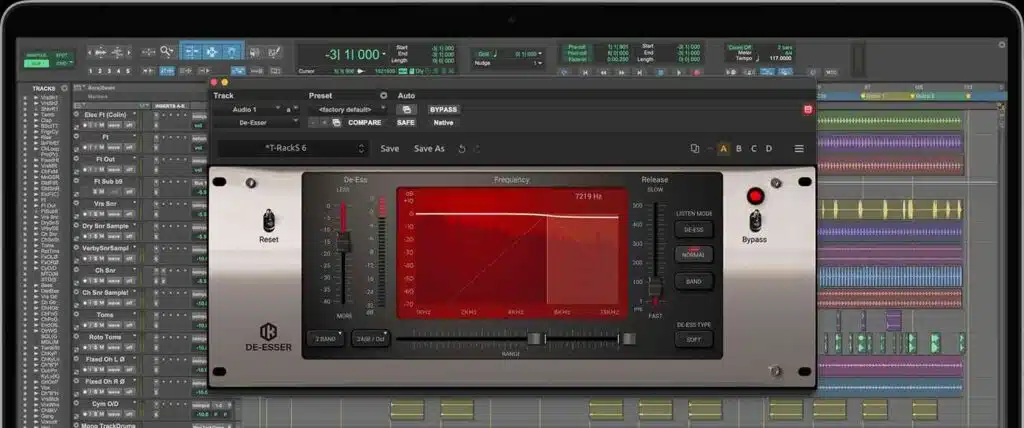
Desktop podcasting equipment setups don’t always have all the soundproofing you need, especially if you’re not in a professional studio. Therefore, these plugins will help you out afterwards.
Sonnox Oxford Reverb
Oxford Reverb is a smart algorithmic reverb which allows you to craft the perfect sound for any recording. Overall, it’s ideal for touching opportuning the sound of a podcast, whether you want an old timey vintage sound, or whether you simply want clearer vocals with more warmth and depth behind them. Additionally, a smart visualizer promises to allow you to craft any reverb imaginable with total control of early frequencies and the reverb tail. It is suitable for both MacOs 10.13 and up, and Windows 10 and above and comes in VST3, and AAX formats. It costs 279 GBP or 372 USD.
Auto Align from Sound Radix
Auto Align is an easy sound aligning plug-in which has actually won an Emmy Award for engineering. It is specifically for dialogue editing and is made so that you can eliminate phase issues by time aligning from different microphones. This ensures your sound is crystal clear with no issues. Used in Multiple TV shows and films algorithms with spectral phase correction, or a real-line work through, it is versatile regardless of whether you are a beginner or experienced podcaster. Nevertheless, it is not cheap at 399 USD. It requires MacOS 10.14 and higher, or Windows 10 and higher.
Big Beautiful Door from Boz Digital Labs
Big Beautiful Door is amazing tidying up audio. At heart, it’s a powerful gate plugin, however it’s one that goes above and beyond, It allows you to tweak multiple parameters and even contains an intelligent automated EQ. Focus is on tonal balance and sound spillage, making it very easy to clean up messy vocal recordings. It has a high pass filter, low pass filter, and look ahead feature too. It’s also great at cleaning up multiple mic setups where there can be complex issues. This plugin costs 99 US dollars and requires Mac OS 10.13 or higher all Windows 7 or higher. It comes in AAX Native, VST2, VST3, and AU formats.
Eventide Precision Time Align: Best Software Podcasting Equipment for Fixing Artefacts
Time Align is exactly as its name might suggest – this is a smart plugin which allows you to slide a recording backwards or forwards to align it with other audio sources. Easy and intuitive to use, this is is ideal for multiple mic setups in podcasting where you may be adding background sounds or other voices. It is essentially a delay, but adapts specially for any timing anomalies you may encounter, and phase issues in general. It costs 99 US dollars and requires macOS 10.14 and up, or Windows 10 and up, and comes in AAX, VST2, VST3, and AU formats.
Izotope RX11: Multi Tool Podcasting Equipment Software TOP CHOICE
iZotope RX11 is billed as the definitive toolkit for audio repair. It has plenty of features for clearing up unwanted noise, including background reverberations and imperfections which come from dialogue or recorded speech. You can use it both for cleaning up content which you like, as well as rescuing content from bad recordings, or old recordings. A smart visualizer and intuitive knobs with labels such as clean up and tone allow you to target specific areas. As a result, you can even pick out individual background noises. It requires macOS Monterey and up, or Windows 10 and up and comes in AAX and VST3 formats.
DeEsser from Waves Audio
This smart plug in specifically targets sibilance – in other words the ‘s’ sounds and other hissing noises which can come from dialogue when you record up close. Generally these can be both a feature of recorded singing and speech, as well as live broadcasts, Threshold attenuation and output meters, as well as an option for side chaining, make it a De Esser with a broad scope. It costs $99 and contains presets for both male and female voices. It requires macOS Ventura 13 and up or Windows 10 64-bit and up and is available in AU, VST3 and AAX formats.
Pro DS from Fab Filter
Pro DS from Fab Filter is another de-esser plugin, meaning that it removes unwanted sibilance such as the S and SH sounds from your recordings. This is ideal for podcasting when you may often be specifically on speech, and these sounds can become even more obvious. This plugin contains threshold and range knobs, as well as options such as local mode and all round mode. Lastly it contains look ahead and side chaining features, as well as wide band and split band EQ plus output metering. It is available for Windows 7 and up oS 10.13 and up and for AU, VST3, CLAP, and Pro Tools formats. It costs 144 GBP or 194 GBP.
Accusonus Era 6: Best Podcasting Equipment Software Bundle
Accusonus Era 6 is an audio cleanup assistant which originally came from a company longer in operation. However as a legacy product it’s still possible to buy this plugin on the internet. Era 6 is technically a bundle of plugins, and it contains ones that allow you to focus on specific audio imperfections which may be making your podcast sound less professional. These include a De-Breath, Mouth De-Clicker, DeEsser, Noise Remover, Reverb Remover, Plosive Remover, Voice Leveler, and more. The plugin is available for free, and works with by most audio platforms and software. It contains detailed visualizes for each specific area of audio you want to focus on, and intuitive output metering and master knobs.
Deverberate from Acon Digital
Deverberate is a plug in which, exactly like its name might suggest, is specifically for removing unwanted reverb. This is useful if you are podcasting somewhere crowded or in a difficult environment where you are not necessarily able to control your recording acoustics. It does this partly by focusing on the initial impulse responses and early reflections, then analyzing them and canceling them out The full version costs 55 pounds or 75 USD and is available for Mac OS and Windows 64-bit in VST3, VST, or AAX formats. It is an artificial intelligence based plugin that follows your recording and separates the reverb from your speech quickly and easily.
Waves NS1 Noise Suppressor
This is an extremely basic plug-in consisting of only one slider and a metering window. It is this which allows you to suppress excess unwanted background noise around a recorded voice. However it is only superficially simple. In fact, smart real time audio analysis dives into your recordings and separates your voice from the noise. Designed both for music and spoken audio, making it perfect for podcasting on the go. It’s small size makes it easy to use on any DAW without distraction. It costs $99 and is suitable for macOS, Ventura 13 and up or Windows 1064 bit and up, coming in AU AAX and VST3 formats.
VerbSuite Classics from Slate Digital
VerbSuite Classics is different from some other entries on this list in that it is a simple bundle of reverbs. However it is worth including because as a piece of podcasting equipment it allows you to shape your sound regardsless of whether you have a professional studio. It can really fill in the gaps if you’re podcasting on the go, or as a guest somewhere else. This reverb bundle stands out for its versatility and breakthrough fusion IR technique. This creates time varying reverbs, giving your podcasts a sonic character that you can use creatively to transport your listeners elsewhere. It costs $149 and comes with expansion packs. Otherwise it is available for Mac OS Catalina 10.15 or later or Windows 10 and later, and comes in AU VST2, AAX, and VST3 formats.
iZotope Dehum: Best Podcasting Equipment for Cleaning Up Sound Easily Top Choice
The De Hum from iZotope is exactly his name suggests. It removes the hum, interference and artefacts from your audio, without influencing the actual recorded speech. Furthermore, this is a versatile plug-in due to its ability to remove a variety of different kinds of hum. these include radio interference, hum from generators, and general noise. It contains two modes static mode, and dynamic mode. The first is to target hum precisely, in the second, filters manually remove any kind of hum. This plugin is part of the RX11 bundle which costs 95 USD in its most basic form. It requires macOS Monterey and Windows 10 and up, and comes in AU, AAX, AudioSuite, and VST3 formats.
Z-Noise by Waves
This is a basic audio restoration plugin which contains attack, release, transients, and knee features. It allows you to control the shape of the EQ profile splitting it into learn and extract features. It’s optimisation allows you to improve the sound of any recorded audio. As a result, it is great for touching up podcasts where you recorded in less than ideal environments. Transient preservation technology removes noise, but maintains the original sound of the audio. It’s adaptive mode extracts a noise profile perfectly through smart tech. This enables you to isolate the sounds you want to get rid of too. It requires macOS Monterey and up, or Windows 10 and up and comes in VST, AU, and AAX formats. This plugin costs 34 GBP.
Zynaptiq Intensity: Best Subtle Smart Software Podcasting Equipment
Zynaptiq is a company which specialises in AI-based audio technology. Intensity is a plug-in which is specifically for improving the clarity, loudness, and bite of any sound. This means it is great for achieving crystal clear vocals or recorded speech, even if you have a budget microphone. It is extremely low latency and supports up to 16 channels, with mid and side processing options too. It’s bias curve feature allows you to weight different parts of the audio as you desire. On top of this, an intuitive intensity knob boosts the overall impact. This is an ideal plug-in to use after removing noise. It helps you effectively add the finishing touches to a podcast for recording and studio quality. It costs $149 and requires macOS 10.15 and up or Windows 10 and newer. Otherwise, it comes in AAX, AU, and VST3 formats.
H3000 Factory from Eventide
The H3000 Factory is an effects processor which contains pitch shift, delay, and modulation features. It is ideal for creating interesting vocal effects to add life to a podcast or mimic different sounds. What’s more, these features also make it perfect for adding to sound effects and other forms of audio foley. Of course, you can also use it as a regular audio plugin for musi. This is due to its low frequency oscillators and envelope generator. Otherwise, it requires macOS 10.9 and up or Windows 8 and up and comes in AAX 64 bit AU, VST2, and VST3 formats.
L2 Ultramaximizer from Waves Audio
The L2 Ultra Maximizer is a basic ultra maximizer and brick wall peak limiter plugin from waves audio. It is ideal for cleaning up and improving the sound of your podcast, especially if you’re working with budget equipment. The UltraMaximizer contains basic threshold and out monitoring features as well as a basic attenuator. It also has look ahead analysis of sound, plus low latency. This means that you can use it on a live broadcast if so desired. To run, it requires MacOS Ventura 13 and up or Windows 10 64-bit and up. It otherwise comes in VST3, AAX, and AU formats. This plugin costs 129 US dollars.
Little Alter Boy – Soundtoys: Best Hidden Gem Podcasting Equipment for Unique Effects
Little Alter Boy from Soundtoys is a monophonic vocal manipulator. It operates by two basic parameters to change the sound of your voice – pitch and formant, The latter of these encompasses a variety of different vocal qualities. In fact, these can change the general tone and even the gender of the voice you have recorded. Outside of this, it has a tube drive feature with a wet-dry mixer. Different modes include transpose, quantize, and robot, as well as a varety of presets. Lastly, a link button allows you to decide whether or not you want to connect pitch and formant. This plug-in requires macOS 10.14 and later, or Windows 10 and later. It comes in AAX, VST2 VST3 and AU format, and costs 99 US dollars.
Waves CLA 2A Compressor and Limiter
For, podcasting you may want a neutral sounding compressor to ensure focus on your speech. The CLA2A from Waves is a classic compressor. It has been on the market for over half a century and can apply to a wide variety of sounds. These include vocals and spoken audio, although it has a long legacy in music recording. It is a zero latency compressor, which allows you to use it in live situations. This means it’s perfect for real time evening out of highs and lows. This can especially help with the sound which may come from an unpredictable recording podcasting environment. This compressor costs 149 US dollars, and requires macOS Ventura 13 and up, or Windows 10 64-bit and up. It comes in AU, AAX, and VST3 formats.
Voxengo Voxformer: Best podcasting Equipment hannel Strip for Multiple Tasks
Voxformer is a vocal channel strip with everything to clean up the vocals on your podcast. It is not specifically for any particular medium, and works both with vocals and speech. It contains a vocal channel strip, a focal compressor, a presets booster, and a noise gate. This last feature is perfect for reducing breathiness in your recording. This plugin is a free download and is available in AU, AAX and VST3 formats for both macOS and Windows.
M Auto Volume from Melda Production
M Auto Volume is a unique tool, despite the ‘volume’ in the name. It’s perfect to clean up your main recording features against whatever the background may be. Originally its developers had recorded music in mind. However, this plugin ideally suits to podcasting, especially if you are out and about. It contains a general section as well as an advanced section. These allow you to influence features such as noise gating and attenuation as well as in-out inside metering. These make this a pretty comprehensive plugin for boosting the volume of any spoken word. It’s highly capable of making it stand out regards background foley. Otherwise, the plugin costs £42 or 56 USD and is suitable for Windows and Mac, coming in VST, VST3, AU, and AAX formats.
Ultra Verb from Eventide Audio
Reverb is not necessarily a specific part of podcasting. Nevertheless, you will need a solid and dependable reverb with plenty of different options. UltraVerb excels at crafting different spaces due to its room size and diffusion features. On top of this, pre and post EQ make it more appropriate for podcasting. This is one of the best plugins if you want a variety of features in one place. Lastly a Lo-Fi feature and a compressor mean that there are versatile options that go beyond just reverb and EQ. It is available for $199 and requires Windows 10 and up or Mac OS 10.14 and up. It comes in AAX, VST2, VST3, and AU formats.
DC8C Advanced Compressor from Klanghelm
DC8C is a flexible compressor that has a variety of different features that make it suitable for podcasting. This is because of its additional ability to remove artefacts from any recording. It’s main skill is smoothing out your sound, and ensuring that your vocals are even and easy to listen to. It contains both feedback and feedforward compression, in order to accurately analyze and monitor your sound. On top of this, it uses zero latency limiting, which allows you to use it in real-time. It requires Windows 10 or higher or Mac OS 10.13 or higher. It comes in AU, VST, VST3 and AAX formats. This plugin costs 23 Euros or 27 USD.
Brainworkx BX XL V3
The BX XL is a mid-side limiter with a focus on clarity. It’s perfect for touching up your voice when podcasting. This limiter adds loudness, ensuring that quiet recordings pack more of a punch. It can even be used to rescue recordings if you need. It contains 10 separate mixes for the mid highs and the mid lows. As a result, you can focus your attention on any parts of the recording which need special care. It costs $150 and requires macOS 12 and up, or Windows 10 and up. It comes in AAX, AU, VST2, and VST3 formats.
Renaissance Vox from Waves Audio
Renaissance Vox is a classic compressor and limiter which is especially suitable for beginner podcasters. This compressor has a basic slider, output metering and gate. With these combined, it’s ideal for those who are podcasting in a controlled environment. This is another mic where the manufacturers claim it as ideal for podcasts. One part of this is it’s smart metering feature that holds more than meets the eye from its simple interface. In fact, it actually uses smart technology to adapt to find the sweet spot depending on the acoustic environment. It is suitable for Mac OS Ventura 13 and above, or Windows 10 at 64-bit and above. It comes in AAX, AU, and VST3 formats.
Nectar 4 from Isotope
Nectar 4 is a specific vocal processing suite for singers but easily applicable to podcasting as well, It is especially good for cleaning up vocals. It contains features such as an auto leveler to maintain the clarity, smoothness, and consistency of your recording. Plus, a smart vocal assistant analyses and processes your voice automatically. Vocal unmasking is the final stand out for making your recorded audio better, clearing unwanted sound up. There is Nectar 4 Elements which costs 49 pounds, whilst Nectar 4 Standard costs 189 pounds. It requires macOS Ventura 13 and up, Windows 10 and up, and comes in AU, AAX, and VST3 formats.
M Auto Align from Melda Production
Recording a podcast with more than one microphone? This can be a common occurrence especially if you are podcasting outdoors, travelling, or involving multiple participants. Therefore phase cancellation can be a frustrating thing to clean up in the production process. M Auto Align from Melda Production is a smart phase cancellation fixer tool, with simple control for latency, an analyzer, and bypass features. It costs £42 or 56 USD, and is available for MacOs and Windows in VST, VST3, AU, and AAX formats.
FabFilter Pro Q
ProQ is a zero latency EQ plugin, so its perfect for podcasting and any other situations where you need clear live broadcasting. It contains both mid and side processing and is a spectral EQ, with the ability to visualise different parts of the spectrum, letting you touch up your sound quickly and easily. It is highly nuanced nuanced with up to 24 EQ bands, making it perfect for subtle changes and precise, shinińg speech recordings. This plugin requires MacOS 10.13 and up or windows 7 and up and comes in VST2, VST3, and AU formats. ProQ4 costs 179 USD.
Headphones
No directory of podcasting equipment would be complete without headphones, so we’ve included some of the best here. Although we’ve mostly focussed on other categories for this directory, these are our absolute top choices to meet a range of needs. if you want a deeper look at headphones, we have a whole separate list about them here. Aside from a mic, these are the crucial piece of podcasting equipment you need to get started, although there are fewer specific podcasting headphones. Often, you can get a great sound with gaming headphones or regular studio headphones. Nevertheless, these are the ones you should specifically know about in terms of offering a range of capabilities.
Sony MDR 7505
These are high quality, dense, and noise blocking headphones ideal for gaming setups or studio podcasting in a home studio or specialised setup. They have a 10hz to 25khz frequency response and a powerful and clear sound with a sensitivity level of 106dbw/m. Overall these are professional heasphones specifically for broadcasting or recording in busy environments, and they cost approx. 130 USD depending on retailer, making them great value for their quality.
Shure SRH 440
The SRH 440 from Shure are ideal for podcasting situations due to their extremely crisp and clean frequency response and audio quality. These headphones have a design especially for isolation of sound, making them ideal for focus in loud environments or for ensuring that you pick up on every detail. They are neutral sounding, clear, and high quality headphones, making them adaptable across a range of frequencies for all podcasting needs – a classic all rounder for beginners. They cost 140 USD approximately though prices may vary based on retailer.
Beyerdynamic DT 770 Pro
These are specialist reference headphones based on German engineering that have a focus on bass frequencies balanced with high quality clarity. As a result, they have become a favorite of broadcasters and studios worldwide. They are able to clearly and accurately reproduce bass frequencies without muddiness or artefacts. As a result, they are ideal for on the go podcasting situations or mixed media podcasts with both music and audio. These headphones costs 174 USD, or 149 EUR as outlined on the Beyerdynamic website.
Sennheiser HD 280 Pro
These are budget headphones that are durable and high quality for their low price. They are ideal for beginner podcasters looking for an option with high level noise cancelling. This is one of their main features. However, they easily block out sound, perfect for loud environments or on the road. They are also collapsible, making them instantly portable wherever you may need them. The main feature of the HD 280 Pro is blocking out high levels of ambient noise. They clearly and crisply reproduce your sound with minimal changes making it extremely true to life. Price wise, they are approx. 115 USD depending on retailer.
MTH MX50
These are some of the most popular gaming headphones with a strong following. They come with passive noise cancelling and a detachable cable, They’re convenient for a variety of situations, especially including podcasting. Apart from this, these headphones are collapsible. They have a closed back design, perfect for helping you focus on your sound. Precise shaping allows you to hear important background noise if needed. They cost approx 196 USD depending on retailer.
Small and Convenient Podcasting Equipment Essentials: Portable and USB Audio Interfaces
Any set of podcasting equipment needs an audio inerface. however, portability is a higher priority than if you are recording in a studio. Podcasting can take you to different places, so podcasting equipment for on the go has become a huge part of the sector. Here are some of the most portable, easy to transport interfaces. Best of all, they often have cool built in features to make capturing sound even easier.
Focusrite Scarlet 212
This is an ideal beginner USB audio interface which is perfect for your first time podcasting on the go. This interface is perfect to easily connect to a laptop, so that you can mix sound in situ. This is something which is especially useful for those podcasting in different locations. Moreover, it contains 2 XLR inputs, and works with both laptops and tablets. The audio quality is powerful and clear, and it and contains ultra low noise mic preamps. It costs approximately 200 USD. However, multiple generations are still relevant meaning it can be found for as low as $150.
Behringer UMC22
The Behringer UMc22 is an extremely beginner friendly interface, which can work with a laptop or tablet. It comes with 1 XLR input and a specially designed mic preamp, as well as an instrument input. USB supplied power means that you can take it anywhere, and even integrate it with instruments if you desire. Otherwise, the UMC22 contains a resolution up to 48 kilohertz, giving it a very clear and precise sound. This is an extremely budget friendly interface, which averages around $50, or even less if you buy it used.
IK Multimedia I Rig Pro
This is an extremely compact and portable slim USB audio interface which can fit in the palm of your hands. The developers claim it is your portable studio on the go. As part of this, it contains intuitive controls, with a single sleek gain switch. It even has the ability to even charge your iPhone or iPad. Ideal for on the go podcasting, where you may only have a tablet or phone to hand. This interface uses lightning-USB cables and you can power it both by direct current and by battery. Switch the 84 volts of phantom power on and off. Or, integrate it with other gear through convenient midi inputs and outputs. The I Rig Pro costs approximately 170 US dollars.
Presonus Audiobox USB
The developers specifically claim this device as a choice for on-the-go recording and mobile podcasting. It contains two XLR inputs for both mics and instruments. There’s also a mixer dial, headphone volume dial, and 48 volts of power. Likewise, it also comes with the company’s DAW software for Mac OS and Windows. On top of this, the internal analog mixer has zero latency monitoring. Therefore, you can easily use this smart interface in live situations. It can cost under 120 USD depending on your retailer though you can also find them used for less.
Mackie Onyx Producer
The Onyx Producer is an extremely rugged and robust interface, which is ideal for live podcasting and streaming. It has a chunky design and a built-in high-Z feature, which allows for immediate, easy, and instant recording. It is zero latency, making it ideal for high-quality and powerful, in-th- moment podcasting. The Onyx contains high resolution 192 kilohertz converters. XLR input, and an instrument jack in the preamp section with switches for each input, as well as direct monitoring. Prices vary although it can be up to 140 US dollars. However it is also available for much less secondhand.
Rode AI1
An extremely small and portable USB audio interface number of features for its small size. It has a combo jack which works for both instrument and headphones, a pre amplifier, and crystal clear monitoring. This mic is ideal for connecting to a computer, phone, tablet or other device. What’s more, it’s comparatively rugged despite its streamlined look, with 48 volts of phantom power. It is likewise very energy efficient with a professional sound and comes with a free version of Ableton Lite. It costs approximately 174 US dollars or 129 GBP.
Behringer UMC 204 HD
This is an extremely affordable and beginner friendly audio interface. It’s ideal for taking with you on the go, too. Yet it’s also perfect for using in a compact, at-home studio setup. It is similar to the UMC22 from the same company, but is much more powerful, with 192 kilohertz of precision. This resolution makes it perfect for more complex podcasts with multiple microphones. Or, for integrating background noise and other endeavors within larger projects that involve more complex mixing. Lastly, it has two inputs and two outputs as well as a combo XLR. This mic is available for approximately 79 US dollars depending on your retailer.
Audient ID4
The Audient ID4 is a small compact and intuitive audio interface. It has highly diverse functionality, including true phantom power. As a result, it is ideal for both beginner podcasters, professional settings, and small home studios. This interface is compatible with MacOS, Windows and iOS, and has one input and two outputs. There is also an additional dual headphone output. It contains a powerful preamp and allows panning when monitoring. On top of this, two gain knobs for the different inputs make it simple and streamlined. This interface it is available for approximately 160 US dollars depending on your retailer.
Zoom U24
This is a small, compact, and high quality yet budget friendly interface. It’s a smaller version that uses the same technology as the rest of the Zoom range. Namely, this is a set of low-noise pre amps. They make this an efficient and sleek interface that offers pristine quality every time. The U24 contains two XLR inputs combined with their own gain knobs. It also has a specific dial for headphone sound to give you perfect monitoring. What’s more, it is extremely affordable at 133 USD or 99 GBP.
AudioFuse Studio: Best Podcasting Equipment for Complex Set Ups
AudioFuse Studio stands out from others as a premium desktop audio interface. It is indeed one of the priciest audio interfaces on the market. The AudioFuse has four separate inputs and mixers. There is an output channel knob, stereo monitoring dials for headphones, and mic and line inputs for each channel. It is ideal for complex podcasting situations with multiple participants. What’s more, it even comes with built in Bluetooth. Nevertheless, it does not come cheap, and averages around 1000 USD depending on retailer.
Behringer Xenyx Q802 USB Mixer: Best Value for Money Desktop Podcasting Equipment
The Xenyx Q802 is a desktop analog hardware EQ mixer with low noise and high headroom pre amps. As a result, it allows you to mix multiple sound sources at once in a compact and portable way. It’s ideal for a small home podcast studio or to take with you to other setups. What’s more, it features 8 inputs and 2 busses and is one of the most affordable options on the market. The Xenyx comes in at around 240 USD although prices vary.
Zoom Livetrak L8
The Livetrak L8 is a mic which is specifically marketed towards podcasters. It is robust yet small enough to fit on a desk in a small home studio. Featurewise, it contains sound pads designed specifically for podcasters. This allows you to store and play jingles, sound FX, intros, and outros. It also contains the ability to minimize audio imperfections when broadcasting remote interviews. As a result, you can hook your phone up and channel audio from skype, facetime, and other platforms. It is expensive, at almost 500 USD but you can find it within the 200 to 300 range secondhand.
Podcasting Equipment for On the Go: Recorders and Samplers
On the go podcasting equipment normally falls into the category of handheld recorders. We have included here a mixed bag of handheld samplers, recorders, and similar. These are useful not just for podcasting, but can store samples or record background foley and sound effects for film and other media.
Sony PCM D10
This is a classic, tried and tested portable recorder with USB capability, which offers stereo recording features too. Microphones are three way and adjustable giving you a powerul lifelike sound spectrum. As part of this, it also contains three separate recording positions. And, of these, one of which is specifically for interviews, which makes it ideal for podcasting. It is on the higher end in terms of price. In fact, it can be anywhere between 200 and 400 dollars depending on retailer.
Roland R07
This is an ideal on-the-go microphone for podcasting, with stereo mics and built-in Bluetooth. What’s more, it’s small but fairly complete as a portable studio. As a result, it’s perfect for using with your phone to free it up such as video. Specific features include scene memory and hybrid limiting, which allow more details and higher quality capture of specific audio environments. This mic averages between $300 on the market.
Zoom F1 LP
The F1 LP from Zoom Audio is specifically for videographers. Nevertheless, it is ideal for anybody wishing to take recordings on the go. It consists of a small recorder with built in SIM card memory as the main feature. This is as well as a clip on lavalier (lapel) mic for convenience. This is a very small mic, one of the smallest on the market. It comes with a built-in LCD screen and despite this is capable of fitting into the palm of your hand. Price wise, it averages around 100 US Dollars depending on the retailer.
Zoom Pod Track P4: Best Podcasting Equipment for Sampling
As its name might suggest, the pod track P4 is perfect for podcasting. It is USB capable, and has four microphones. However, the stand out feature is sound pads with which to store different sound effects. It is larger than the F1 LP but still very portable and has eight knobs for controlling the various mics and panels. This is one of the most diverse mics in terms of features for it’s size size. This mic is around $150 which depends on retailer.
Sound Devices MixPre 3 II
The mix pre is a professional and powerful audio recorder which comes in a built and preamp making it ideal for podcasting in loud environments. It is USB capable and his ideal if you are both a podcast and a musician as it is actually a full field recorder capable of allowing you to create full tracks. This is actually a version of a recorder called The Mix Pre 6. It comes with three preamps and a three by two mixer. Overall, it is an extremely high-end piece of professional gear and can cost upward of 900 dollars.
Zoom H5
This is a versatile and interchangeable on the go recording device which has multiple different mics and allows you to switch around mic capsules. It has a built-in LCD screen and dials to control each of the mics. Secondly, it contains built-in effects including a low cut filter compressor and limiter. The H5 is shock mounted and is capable of handling up to 140 decibels in places, and takes power either from USB or battery. Apart from this, it averages around $200 depending on retailer.
Tascam DR 40x
This is a portable XLR recorder which allows you in the moment without the need for a laptop, making it specifically designed for podcasters and other on the go professionals. On top of this, it also contains USB connectivity, with four tracks and built in preamps. This mic is also capable of capturing ambient sound, which is ideal if you want to present the atmosphere of a location. It contains three different auto level modes, and compression, a limiter, peak reduction, and auto leveler. This handheld recorder costs approximately 80 to 100 US dollars depending on retailer.
Zoom H6: Best Hi Tech Multi Choice Podcasting Equipment TOP Choice
H6 is a versatile on-the-go recorder, which is ideal for podcasters, filmmakers, and other endeavors. It contains interchangeable capsules, and six discreet mic level inputs, as well as over-dubbing. As a result, it has many of the features of a studio in the palm of your hand. This mic also contains XLR inputs, making it instantly compatible with recording in a studio environment itself. The Zoom H6 averages around 150 to 200 US dollars depending on your retailer.
Tascam DR 100 MKIII
The DR100 MK3 is a recorder which is perfect to take both on the road and in the studio. It has a crisp and clear sound, with an impressive 102 decibel signal to noise ratio. This, amongst other things, makes it very energy efficient. Its use of parallel converters makes it ideal for capturing subtle sounds which may be far away. As a result you can record situations where you need delicacy. This mic has a shock mount and takes power both by USB and an AC adapter. It averages at around 250 US dollars depending on your retailer.
Marantz Pro PMD 661 MK 3: Best Mid Range Podcasting Equipment for Portability
This is a rugged and high quality field recorder with two channel built-in microphones. It’s ideal for a wide variety of environments including spoken conferences podcasts and more. It’s main feature is the stereo condenser microphone set, although it also has an omnidirectional boundary microphone as well. This mic contains both microphone and XLR inputs, and gets power both by alternating current and battery. Lastly, it contains a built-in playback speaker bridges around 150 to 200 US dollars.
Final Thoughts: Podcasting Equipment for Everyone
Podcasting is a diverse field. It can include everything from high end broadcasting equipment to portable mics for field recordings. Podcasting equipment can therefore mean many things and finding the perfect setup means considering budget, space, portability, and frequency of your recording. Some podcasting equipment may also be better suited to different themes than others, for example vintage equipment which can enhance a particular topic and immerse your listeners.
One thing that makes it so exciting is the scope for sound effects and sonic alteration. This can be done through creative plugins and analog equipment with different character facets, so we hope you’ve enjoyed some of the options here that we picked especially for this. And, if you love quirky software that can add life to recording – whether podcasts or music – be sure to check out our software section here. Or, for more podcasting equipment ideas for a home studio setup, check out portable hardware, and our general hardware section.